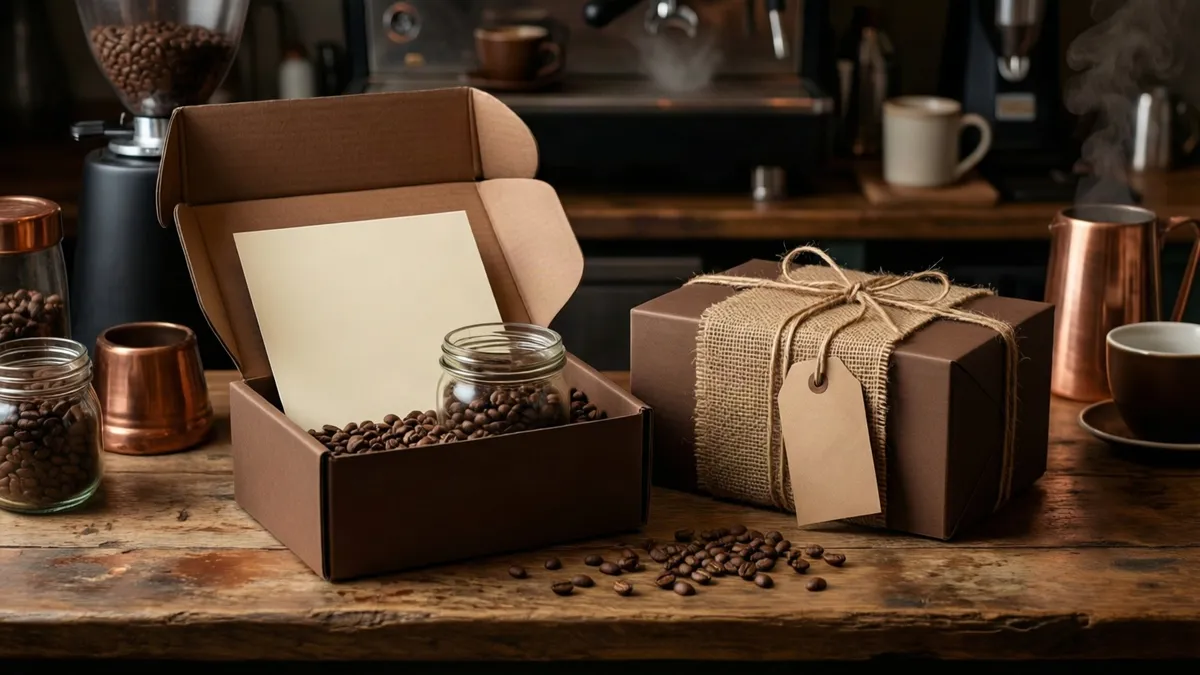
In short: A coffee subscription hands them a menu: they pick the beans, the roast, and the delivery schedule. A coffee of the month club hands them a surprise; someone else picks, and that is the point. The subscription is the better gift when you know how they brew. The club is the better gift when you don't, because surprise is the only thing that cannot be wrong.
We write buying guides, not reviews: we have not ordered from every service described here. Plan details come from the services' own listings, and whatever Amazon shows when you click is the authoritative figure.
This article contains affiliate links. If you buy through one, we earn a small commission at no extra cost to you. We only recommend what we would suggest to a friend.
The Federal Trade Commission's endorsement guides, 16 CFR Part 255, require a disclosure like that one to be difficult to miss, so it sits above every link here. Our full affiliate disclosure has the rest.
Written by the editorial team behind this site — gift researchers who compile buying guides from public sources, manufacturer specs, and customer reviews rather than hands-on product testing.
Most gift guides treat a coffee subscription and a coffee of the month club as synonyms. They are opposites wearing the same wrapping: one sells control, the other sells surprise. We place both inside our wider guide to gifts for coffee lovers, which starts with the machine on their counter. This page settles the beans question on its own.
The routine itself is safe ground. The National Coffee Association's 2026 report found that 66% of American adults had a coffee the previous day, more than any other beverage, tap or bottled water included. The risk is not whether they drink coffee. The risk is who controls the beans.
The subscription model: they pick the beans
Think of a subscription as a menu with a calendar attached. The recipient takes a short taste quiz, states a roast preference and a grind, and picks a cadence: weekly, every two weeks, monthly, or a custom interval. Ten of the 13 guides we compared treated that flexibility as a given, which tells you it is table stakes.
Freshness is the second promise. Many roasters roast after you order and ship within days, and the listing states that window. Look for a printed roast date while you are at it. The FDA's Food Labeling Guide spells out what a food label must carry, and a roast date is not on that list. A roaster that prints one is telling you something voluntary.
Now the control argument. Per the NCA's 2026 report, 47% of American adults had specialty coffee the previous day, edging out traditional coffee at 42%. Among 25 to 39-year-olds, past-week specialty ran 69%, the highest of any age band. People like that own opinions about roast levels. A menu lets them act on those opinions; a surprise overrules them.
Most services sell whole bean or ground. Whole bean is the fresher default, but only if they grind; a bag of whole beans is a locked door otherwise. If you are unsure what sits on their counter, our burr vs blade piece names the one spec to check. Multi-roaster plans trade in breadth; single-roaster plans trade in consistency.
The club model: someone else picks
A club is curation with a stamp on it. Every delivery is a selection someone else chose: a rotating roster of roasters, a new origin, a tasting card in the box. You are not buying beans. You are buying the month's reveal.
That reveal has a real audience. The NCA's 2026 survey reported that 35% of past-day specialty drinkers say flavor is part of what makes a cup "specialty" to them. A club bets on exactly that. It walks them through flavors they would never have ordered for themselves.
Clubs sell prepaid terms, most with a gift note option, and some specialize: award-winning competition coffees, decaf-only rosters, expert-curated picks. The category blurs at the edges, because a club is really a subscription with the preferences removed.
Who it fits: the recipient you cannot pin down. They drink coffee; you know that much. Surprise is the part you cannot get wrong.
Coffee subscription gifts vs coffee of the month clubs, side by side
Here is the decision in one grid. Cost figures are ours, computed from the 13 ranking guides we compared; the judgment columns are our call, not a sourced figure.
| What to compare | Coffee subscription | Coffee of the month club | Better when you know their brewer | Better when you don't |
|---|---|---|---|---|
| Who picks the beans | They do, from a menu | The club does, delivery by delivery | Subscription | Club |
| Roast-date transparency | Usually printed, often roasted to order | Varies by roaster | Subscription | Either |
| Cost | Billed per bag, median about $25 in our guide comparison | One prepaid price for the term | Either | Either |
| Flexibility | Skip, pause, swap, choose the grind | Arrives as curated | Subscription | Club |
| Gift length | Prepaid, or renewing until canceled | Fixed term that ends on its own | Either | Club |
| Cancellation | Self-serve if it renews | Nothing to cancel | Either | Club |
Our take: When the brewer on their counter is a known quantity, control is the better gift. A menu lets them match roast to machine and skip what they would never drink. When you are guessing, the club's surprise is the safer buy; a wrong guess in a subscription is a whole term of wrong beans. And if they already subscribe to anything, we stop arguing between models and put the money into gear instead.
If the grid still feels academic, our best gifts for coffee lovers piece ranks by brewer instead.
Our suggested checklist before you click buy:
- Confirm how they brew, or check the machine in a photo you already have.
- Decide who picks: menu (subscription) or surprise (club).
- Choose a prepaid length and put the delivery count in the card.
- Match whole bean or ground to the grinder they own, and decaf if they need it.
- Read the pause and cancellation terms before your card is charged.
Cost per cup and freshness: the two numbers that matter
You will almost certainly buy this online. E-commerce came to 17.1% of U.S. retail sales in the second quarter of 2026, up 12.2% from a year earlier, per the Census Bureau's quarterly report. Subscription and club sellers live in that channel. So the listing is the entire store, and read the pause terms before the card is charged.
Price spreads mostly by bag size, which runs from 6-ounce half bags to 2-pound and 5-pound sacks in the guides we compared. Across those same guides, price mentions run roughly $10 to $105, with a median around $25. Per-cup cost nobody publishes; it depends on how strong they brew. Treat any per-cup promise in an ad as decoration.
Freshness splits the models less than the marketing suggests. A subscription that roasts to order has the edge on paper. A club shipping curated bags can match it whenever the roaster prints dates, so run the same check either way: prefer a "roasted on" date to a "best by" one. The first is information. The second is a countdown you cannot read.
If they already have a subscription
Ask first. A duplicate subscription is the one coffee gift that lands as a chore: two bags in a week, one drinker, a cancellation task with your name attached.
Before you assume beans are welcome, check where they drink. The NCA's 2026 data put away-from-home coffee at 36% of past-day specialty drinkers, versus 23% of traditional drinkers. If their habit lives in cafés and offices, a second batch of home beans sits unused.
If they do already subscribe, the models stop mattering. Our guide for coffee lovers with everything makes the same pivot we would: the grinder is the gift. A capable burr grinder upgrades every bag they will ever receive, menu or surprise. Alternatively, build a small do-it-yourself club with two or three bags of single origin whole bean coffee, spaced a month apart.
Decaf, espresso, and pod machine compatibility
Start with how they serve it. Per the the same study, 76% of past-day specialty drinkers had their coffee hot while 60% had it cold, and plenty do both. That overlap is why compatibility questions come before brand questions.
Decaf is no longer a footnote. Many services carry a decaf rotation, and a few roast nothing else; for a stopgap, a bag of decaf whole bean coffee alongside the note works. If they drink decaf at night and regular at noon, favor a plan that stores separate preferences.
Espresso needs its own lane. Some subscriptions filter for espresso roasts, and it matters: beans pulled as espresso behave differently than beans brewed as drip. Pod owners are the hard edge case, because a pod machine takes sealed single-serve cartridges built for one system, and loose beans are no use to them. Our pod machine gift guide matches gifts to the system instead.
Most services also let you write a gift note and set the first ship date. That second one is quietly useful: the occasion can be next week while the term starts next month.
FAQ: coffee subscription gifts
Do coffee of the month clubs let the recipient choose their own beans?
Some do, through a short preference form or a skip button. Many are pure surprise by design, and that is the product. If choosing matters to them, pick a subscription with a taste quiz and a swap option.
How long does a club gift last compared to a subscription?
Club gifts run prepaid terms that end on their own, commonly sold as three-month, six-month, or twelve-month runs. A subscription can be bought the same way, or as a renewing plan that continues until someone cancels it. Put the delivery count in the card either way.
What happens if the recipient already has a subscription and gets a second one?
Expect overlap: two bags arriving the same week, then a slow backup in the pantry. Most services let the recipient pause a duplicate for a month or two, which softens the pileup. Gear avoids the collision entirely.
Can a coffee of the month club ship internationally?
A few clubs ship beyond the U.S., often to Canada, the UK, and parts of Europe, and some subscriptions do too. Customs fees and slow transit are the tradeoffs. Check the destination list on the seller's shipping page before you pay.
Do coffee subscription gifts include shipping in the price?
Sometimes. Prepaid club terms usually bundle delivery into one price, while per-bag subscriptions often add shipping at checkout. Neither pattern is universal, so check the cart total before assuming the sticker covers the doorstep.
How much should I budget for a three-month gift?
In our comparison of 13 guides, bag prices clustered around a $25 median. Two bags a month for three months is six bags at the per-bag rate, plus any shipping. That arithmetic is the honest budget check.
Tomas Vega writes buying guides, not reviews; nothing here was tested by us.
Sources
- U.S. Census Bureau — "Quarterly Retail E-Commerce Sales Report" (https://www.census.gov/retail/ecommerce.html) "Retrieved 2026-09-21".
- Specialty Coffee Association — "New Release: 2026 National Coffee Data Trends Specialty Coffee Report" (https://sca.coffee/sca-news/2026-national-coffee-data-trends-report) "Retrieved 2026-09-21".
- U.S. Food and Drug Administration — "Food Labeling Guide (PDF)" (https://www.fda.gov/files/food/published/Food-Labeling-Guide-%28PDF%29.pdf) "Retrieved 2026-09-21".
- Federal Trade Commission — "Guides Concerning the Use of Endorsements and Testimonials in Advertising" (https://www.ftc.gov/legal-library/browse/federal-register-notices/guides-concerning-use-endorsements-testimonials-advertising) "Retrieved 2026-09-21".